Fat Lava: The Second Life of West German Ceramics
PRIMITIVE - Friday, November 06, 2026By Glen Joffe
 |
|
The Quick Backstory
Shortly after World War II ended, the German ceramics industry, a pre-war marvel of artistic virtuosity and technology built upon centuries of tradition and artistic achievement, resurrected itself with the creation of a new type of glaze applied to everyday decorative wares. Vases, pots, and jugs were formed and then mass produced on an industrial scale. The products were fashionable, well-executed, attractive, modern, and fit extremely well with the developing post-war aesthetic. Known as “Fat Lava,” these ceramics found their way into living rooms everywhere. It was an eruption that took the world by storm, peaking in the 1960s and 70s. Then the market cooled down. The kilns stopped firing. Potteries closed one by one, and the production of fat lava went dormant.
Yet, over time a different type of market emerged. Fat Lava became collectible, a unique ceramic firmly enmeshed in design history.
What it Looks Like & How it’s Made
 |
|
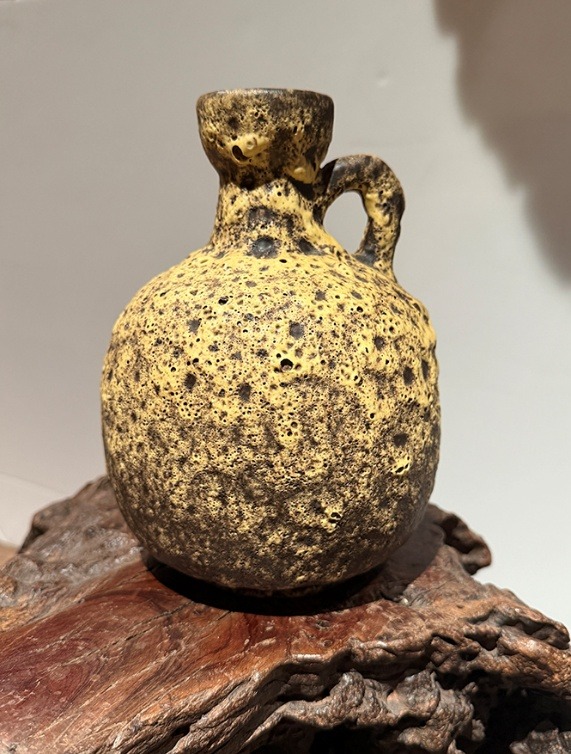
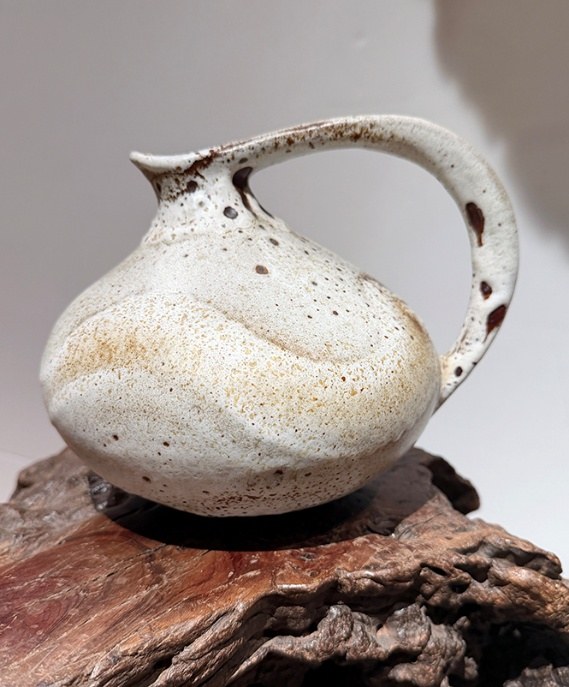
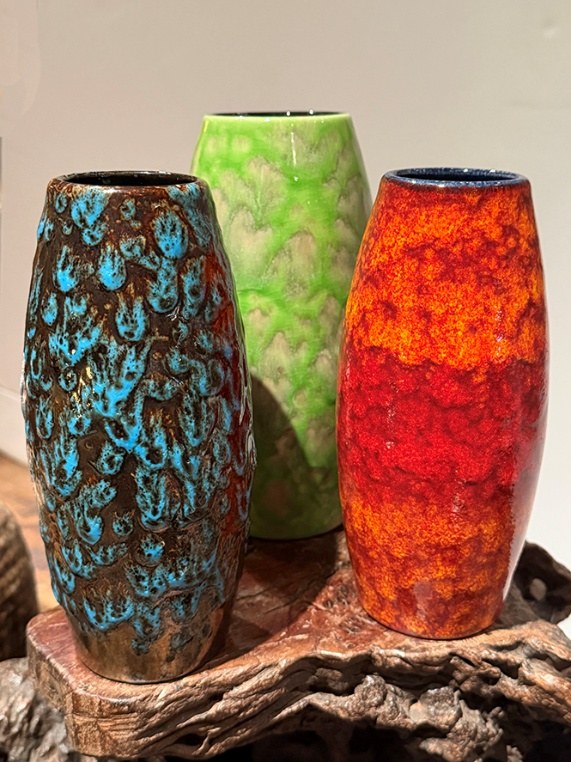
Lava, frozen mid-flow. It’s an easy way to describe one’s first impression of Fat Lava ceramics. Run a hand across a Fat Lava vase and the surface answers back: blistered, cratered, crusted, as if the glaze is still cooling. It was made to look that way. In postwar West Germany, potters built their glazes to erupt. They were engineered to misbehave. Glazes were loaded with additives, silicon carbide among them, that released gas as the kiln came up to temperature. Bubbles rose through the molten glaze, burst, and froze where they broke. The result was a surface of pits, ridges and foam, laid on thick, or “fat,” over both traditional and uniquely modern forms. Fat Lava ceramics produced a reaction that answered to heat, to a piece’s place in the kiln, and to the depth of each glaze’s application. No two pieces fired alike. The result is that every piece of Fat Lava is singular, even in factory production.
 |
|
Art at an Industrial Scale
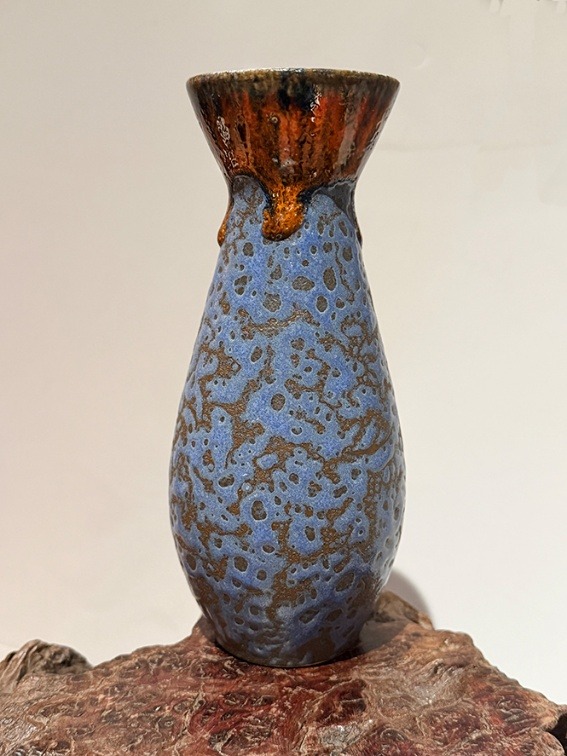
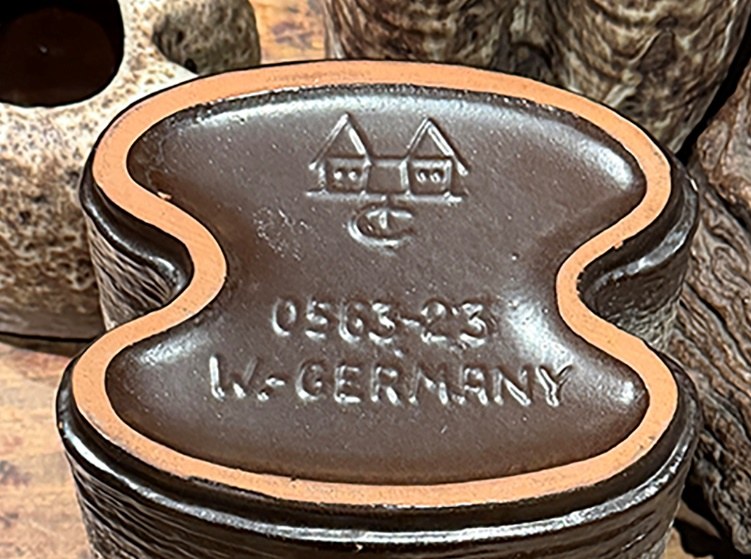
The heart of Fat Lava production lay in the Rhineland and the Westerwald, a region with a long potting tradition. From the 1950s through the 1970s, more than a hundred companies and studio potters made art pottery. They were found in West Germany. Among them, Scheurich, Ruscha, Bay, Carstens, Roth and Otto Keramik became the backbone of a booming export trade. The scale of production was industrial. Scheurich, the largest of them, exported more ceramics than any other German company. Its forms were cast in molds, made in runs of at least 500 and dressed in a rotating palette of bright glazes bursting with color: orange against black, acid yellow, deep purple, volcanic gray, sky blue, and pomegranate red. Other palettes gained popularity. Deep earth tones, reminiscent of soil and mountains became popular. The colors of the natural world found their way into capricious glazes. In-house designers created new shapes. Some freelanced for multiple companies. Heinz Siery drew forms for Scheurich and Carstens, Bodo Mans for Bay, Kurt Tschörner for Ruscha.
 |
|
The Flow Cooled & Reemerged
The eruption of Fat Lava lasted roughly twenty years. However, by the late 1970s taste had turned toward quieter interiors, and cheaper imports undercut German makers. The factories simplified their lines, then began to close as demand for Fat Lava continued to cool. Marei shut around 1984. Ruscha closed in 1996 and sold many of its molds to Scheurich. Bay ended in 1997, renamed Römertopf. Scheurich survived by turning to planters, which it still makes today. The kilns that made Fat Lava were not fired and the industry went dormant.
 |
|
Then the material began to move again, this time slowly, out of attics, flea markets and estate sales and into collections. Interest stirred in the mid-1990s. In 2006, collector Graham Cooley mounted the exhibition Fat Lava: West German Ceramics of the 60s & 70s at the King’s Lynn Arts Centre in England. Mark Hill’s accompanying book gave the field its name and its vocabulary. The book remains in print in a revised edition, and a Japanese edition followed in 2021.
Today, Fat Lava easily fits in established as well as budding ceramic collections as well as numerous types of interiors. It sits beside mid-century furniture, against raw concrete, in traditional as well as ultra-modern interiors, and equally well in display cases meant for prized possessions. Collectors of Fat Lava can be found throughout the world, but now its supply is fixed. No factory or studio will make these pieces again.
See Fat Lava in Person
Photographs flatten Fat Lava. The surfaces need raking light and a close look. They provide an eye exercise and reward a hand. A selection of Fat Lava ceramics can be seen Saturday, November 7 from 12-5 in the Five Elements Library at Primitive. Visit in-person and see what twenty years of controlled eruptions left behind. Prices range from $140 - $560